01 — Low level
Going below C.
Rewriting simple functions in Assembly helps reveal what abstractions usually hide. Every instruction becomes intentional, and a single register mistake can completely change the behavior of the program.
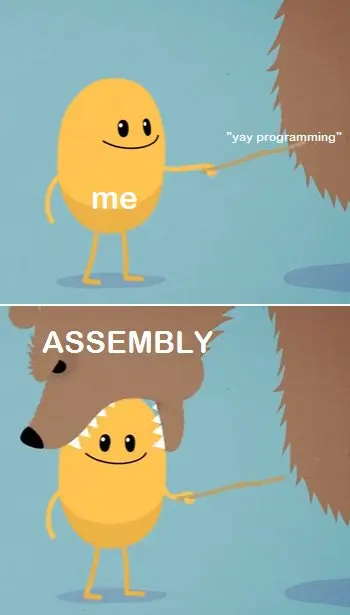
Fig. 01
Low-level programming / 2026
42 project
A reimplementation of standard functions in Assembly to understand execution closer to the processor.
Stack
Skills gained
Libasm is a low-level project that consists in rewriting several classic libc functions directly in Assembly. It is a short but very formative project, because it forces a precise understanding of calling conventions, registers, memory and interactions with the system.
01 — Low level
Rewriting simple functions in Assembly helps reveal what abstractions usually hide. Every instruction becomes intentional, and a single register mistake can completely change the behavior of the program.
02 — Conventions
This project was highly instructive for me, especially because I had to make a second attempt before successfully validating it. I was using movsx instead of movzx in ft_strcmp, which caused certain bytes to be interpreted as signed values and could therefore reverse the comparison result for characters beyond standard ASCII.

03 — Understanding
Libasm gave me a better intuition of program execution: argument passing, system calls, memory and return values. It is a useful foundation for low-level debugging and security work.
